
-
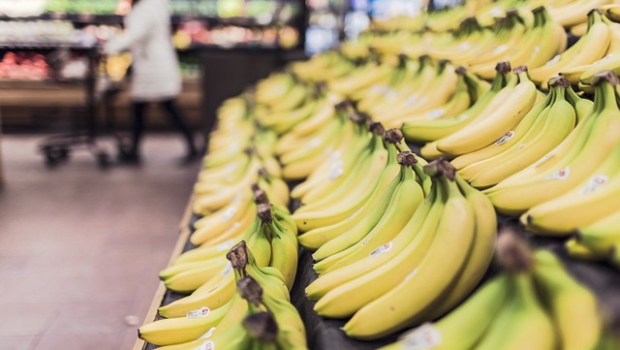
-
Published on
02/09/2026
by Any Business.Com.Au
Everybody’s Got to Eat: Why Owning a Supermarket Has its Perks
There are plenty of businesses you can start because you believe a particular product, service or trend is going to take off.
Then there are businesses built around something much more fundamental: everyday needs.
Food is about as fundamental as it gets.
People need to eat, families need groceries, households need essentials and, regardless of what else is happening in the economy, people still need to put food on the table.
That is one of the reasons supermarkets have long attracted business owners and investors. While the supermarket industry has certainly changed, an independent supermarket can offer an interesting combination of recurring demand, established purchasing habits, multiple revenue opportunities and the potential to become a genuinely important part of its local community.
For someone considering buying a business and wanting to be their own boss, supermarket ownership is certainly worth considering.
A business built around an everyday necessity
One of the biggest attractions of a supermarket is relatively straightforward: people need groceries.
Unlike businesses that rely heavily on discretionary spending, supermarkets sell products that households purchase regularly. Bread, milk, fresh food, meat, fruit and vegetables, pantry staples, cleaning products, toiletries and other household essentials are part of everyday life.
That doesn't mean supermarkets are immune to economic pressures. Customers can become more price-conscious, change brands, shop around or reduce spending when household budgets are under pressure.
However, the underlying demand for food and essential household products remains.
People might postpone buying a new television, delay a holiday or reconsider a restaurant meal, but they still need to buy groceries.
This recurring demand is one of the fundamental reasons supermarkets can be robust businesses.
There's a reason people keep coming back
Another attraction is customer frequency.
A supermarket isn't typically a business where someone makes one purchase and disappears for six months. Customers can visit several times a week, weekly or fortnightly, depending on their household and shopping habits.
That creates the potential for a strong relationship between the business and its customers.
For an independent supermarket, this relationship can be particularly valuable.
A local operator may know their customers by name. They may understand which products are popular in the area, what the local community is looking for and which lines aren't selling.
That local knowledge can become a genuine competitive advantage.
A large supermarket chain might have enormous buying power, but an independent operator can potentially offer something different: flexibility, familiarity and a personal connection with the community.
Independent supermarkets can be more than just a place to buy groceries
Walk into a successful independent supermarket and you may find that it feels quite different from a large chain store.
It might stock products that reflect the local community. It might source from nearby producers. It could have a strong fresh-food offering, a butcher, bakery, deli or takeaway component. It might offer home delivery or cater to particular dietary preferences.
The opportunity is to understand what customers want and build the business around those needs.
That flexibility can be particularly appealing to an owner-operator.
Rather than simply stepping into a predetermined corporate structure, an independent business owner can often have more influence over the way the store operates, the products it carries, its marketing and the customer experience.
Of course, there are still suppliers, regulations, employees, costs and commercial realities to manage. But there can be considerably more room for entrepreneurial decision-making.
Why buying an existing supermarket can make sense
Starting a supermarket from scratch is a very different proposition from purchasing an established one.
An existing business may already have many of the foundations that take years to develop.
There could be an established customer base, trading history, supplier relationships, employees, equipment, systems, stock, a recognised local presence and an existing location.
That doesn't automatically make an existing business a good investment. Every business needs to be assessed carefully.
But buying an established supermarket can provide a buyer with something particularly valuable: a business that is already operating.
Instead of spending years building awareness and attracting customers, the new owner may be able to focus on improving, managing and growing an established operation.
This can be particularly attractive to someone who wants to become their own boss but doesn't necessarily want to start entirely from zero.
You can still put your own stamp on it
Buying an established business doesn't mean taking over and doing everything exactly the same way.
In fact, one of the attractions of buying a business is the opportunity to identify what is already working and then look for ways to improve it.
Perhaps the store could expand its fresh-food offering.
Maybe there is an opportunity to improve merchandising or introduce new product lines.
Could online ordering or delivery become more prominent?
Could the store develop stronger relationships with local producers?
Could marketing and social media be improved?
Could the customer experience be refreshed?
These are the sorts of questions an entrepreneurial owner can ask.
The best opportunities aren't necessarily about completely reinventing a supermarket. Often, they are about making a series of sensible improvements that collectively make the business more competitive and more profitable.
Multiple ways to generate sales
A supermarket isn't dependent on one product.
That diversification can be another attractive feature.
A typical store can sell thousands of different products across categories including fresh produce, meat, dairy, bakery, pantry goods, beverages, frozen food, health and beauty, household products and more.
Depending on the business, there may also be opportunities around prepared foods, catering, takeaway products, delivery, specialty products or services.
This variety gives an owner considerable scope to understand purchasing patterns and determine where the strongest opportunities lie.
It also means there can be multiple levers to work with when looking to improve the business.
For example, an owner might identify an opportunity to increase sales in a particular category, reduce wastage, improve stock management or introduce a product range that isn't currently available locally.
Supermarkets can benefit from being part of the community
Location matters enormously in retail.
An independent supermarket serving a local community can become part of the fabric of that community.
Customers aren't just buying groceries. They're often choosing where they shop based on convenience, familiarity, service, product range and trust.
This creates an opportunity for an owner to build a reputation locally.
Supporting community events, working with local suppliers, sponsoring sporting clubs or simply providing consistently good service can help strengthen those relationships.
For an owner who enjoys dealing with people, this can be one of the most rewarding aspects of supermarket ownership.
You're not sitting behind a desk waiting for customers to find you. You're running a business that people interact with regularly.
It can suit someone who wants to be their own boss
The appeal of being your own boss is easy to understand.
You have greater control over your working environment, business direction and decision-making.
But owning a business also comes with responsibility. Being the owner doesn't mean working less or having no boss. In many cases, it means customers, employees, suppliers, landlords, regulators and financial commitments all become part of your responsibility.
Supermarket ownership is therefore best suited to someone who is prepared to be hands-on and understands that successful retail businesses require attention to detail.
You need to be comfortable managing people, monitoring costs, making decisions, dealing with customers and responding to changing market conditions.
For the right person, however, that responsibility can be exactly what makes business ownership appealing.
Instead of helping someone else grow their business, you're building an asset of your own.
There can be opportunities to grow
Growth doesn't necessarily mean opening another supermarket.
It might mean increasing the average value of each customer's shop, improving margins, expanding particular departments, reducing waste or attracting new customers.
It could mean developing a stronger online presence, introducing delivery services or targeting a particular customer segment.
There may also be opportunities to expand the physical premises or add complementary services, depending on the location and business model.
The important point is that growth needs to be based on the individual business.
A good buyer isn't simply asking, "How big can I make this?"
They're asking, "Where are the genuine opportunities to improve this particular business?"
What should potential buyers look for?
The fact that supermarkets sell essential products doesn't mean every supermarket is a good investment.
Due diligence is critical.
Before purchasing any business, prospective buyers should carefully examine the financial performance, sales history, expenses, margins, rent and lease arrangements, staffing costs, supplier relationships, stock levels, equipment, competition and the condition of the premises.
It's also important to understand how dependent the business is on the current owner.
A supermarket that performs exceptionally well because of the owner's personal relationships, long hours or particular expertise may present a different opportunity from one that has strong systems and a capable management team.
Buyers should also consider the location.
Is the surrounding population growing? Is there strong local demand? What competition is nearby? Is parking convenient? Is the store easy to access? What does the local customer base look like?
These questions can be just as important as the sales figures.
Professional financial, legal and business advice should also form part of the purchasing process.
The appeal of an established customer base
Perhaps one of the most compelling reasons to consider buying an existing supermarket is that you're potentially buying more than shelves, fridges and stock.
You're buying an operating business and, importantly, an existing relationship with its customers.
That relationship can take years to build.
A loyal customer base provides a foundation from which a new owner can work.
The goal then becomes to retain those customers, understand what they value and find ways to attract new ones.
For an entrepreneur, that can be an appealing proposition.
Rather than spending the first few years trying to prove that your concept works, you can start with an established operation and focus on what comes next.
A business with a purpose beyond profit
There is also something satisfying about owning a business that provides an essential service.
A supermarket can employ local people, support suppliers, provide convenient access to everyday necessities and become a meeting point for the community.
For some business owners, that sense of purpose matters.
You're not simply selling products. You're providing something people genuinely need.
And when you operate independently, there can be a strong connection between the business and the community it serves.
So, is supermarket ownership worth considering?
For the right buyer, absolutely.
Supermarkets can offer many of the characteristics people look for when purchasing a business: recurring demand, regular customers, diverse product categories and the opportunity to build on an established operation.
They can also provide something that appeals strongly to entrepreneurs: the opportunity to take control.
You can make decisions, build relationships, improve the business and ultimately create something that belongs to you.
And let's face it, there is a pretty straightforward reason the sector continues to attract attention.
Everybody's got to eat.
The real question isn't whether people will need groceries. It's whether you can find the right supermarket, in the right location, with the right fundamentals and the right opportunity for you to take it forward.
For someone dreaming of leaving employment behind and becoming their own boss, purchasing an established independent supermarket could be an opportunity worth putting on the shopping list.
Ready to find yours? Search supermarkets for sale here.

Related articles

-
 02/09/2026 by AnyBusiness.com.auThere are plenty of businesses you can start because you believe a particular product, service or trend is going to take off.Then there are businesses built around something muc... Read more
 -
 24/07/2026 by AnybusinessAustralia's hospitality industry is facing one of its toughest periods on record, with new figures showing 9.4% of food service and hospitality businesses ceased trading over th... Read more
 -
 21/07/2026 by AnyBusiness.com.auArtificial intelligence has moved quickly from something many small businesses were simply curious about to a tool that is increasingly becoming part of the everyday working wee... Read more